Finchley · North London · Hertfordshire
07784 870239adamoc87@hotmail.co.uk
Call AdamFree Quote
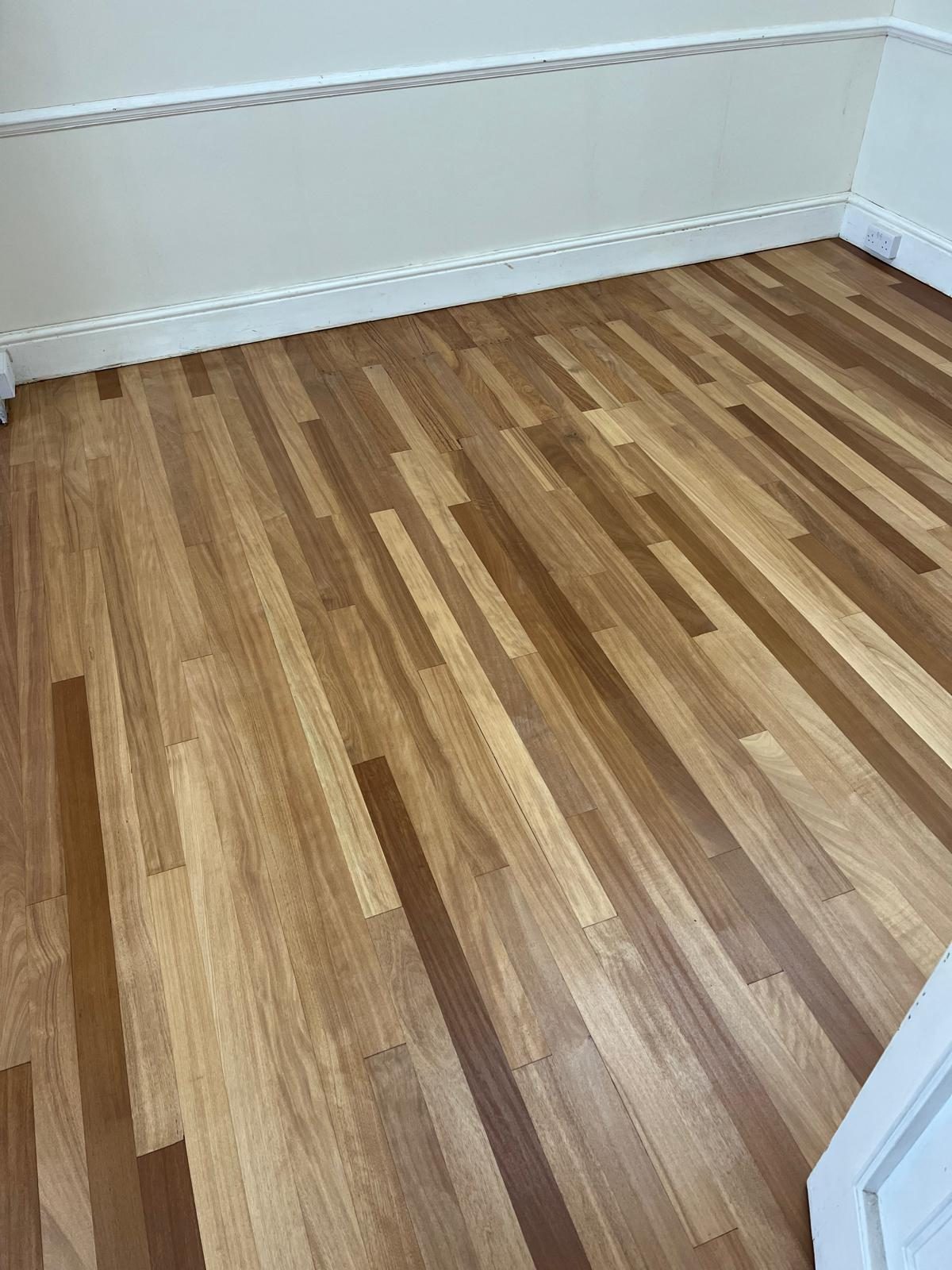
Handheld sander working on a wooden staircase handrail
AOC Sanding · Finchley & North London

Staircase Sandingin Finchley &North London

A carefully assessed route to renewing suitable timber stairs, with attention to existing wear, access, finish selection and the practical needs of everyone using the staircase.

Get a Free Quote
Over 20 years’ individual experience · Free quotes
20+ years’ experienceIndividual trade experience
Lägler-trainedSpecialist floor care
Public liability insuredCover held by AOC Sanding
Free quotesDiscuss your project with Adam
The right work for your wood

Staircase Sanding:what to consider.

Look at the complete staircase

Staircases combine horizontal treads, vertical risers, exposed edges and often several different timber details. Their condition cannot be judged from the centre of one step alone. Sanding may improve worn surfaces where construction and remaining material allow it, but a staircase also needs to remain a safe route through the building. The proposed work should consider its layout, existing coverings and daily use before any finish is selected.

AOC Sanding is run by Adam O’Callaghan, who has over 20 years of individual experience and is Lägler-trained. Public liability insurance is held and quotations are free. Those facts do not establish a particular staircase preparation method or dust-reduction percentage. No floor-sanding dust claim is made for staircase work; the protection and cleaning arrangements need discussion for the actual property.

Define which parts you want renewed

A request to sand the stairs can mean treads only, treads and risers, or a wider collection of balustrade and landing details. These are different scopes. Identify the parts you want considered and whether carpet removal or a future runner forms part of the plan. Landings and adjoining floors should be described separately so that their inclusion is clear rather than assumed from the staircase service name.

Before the problem gets overlooked

Recognise the signs.Avoid the common mistakes.

Wear concentrated on the walking line

The middle of a tread can wear differently from its sides, especially where a runner has protected part of the timber. Old fixings, paint lines and changes in colour may appear once a covering is lifted. Some marks may remain after preparation. An assessment should establish how much material can reasonably be removed without trying to erase every trace of the staircase’s previous use.

Movement and damaged step edges

A moving tread, broken nosing or loose component needs consideration before cosmetic refinishing. Sanding does not secure an unstable staircase or rebuild missing timber. The condition of walking surfaces and edges matters because people place weight on them repeatedly. Any repair requirement should be identified and scoped separately, with structural concerns referred for appropriate assessment rather than disguised by a new coating.

Mixed materials beneath old coverings

A staircase may contain several timber species, earlier repairs or manufactured components that were never intended to be exposed. Removing carpet does not guarantee a uniform timber appearance. Paint and adhesive residues can also complicate preparation. If older coatings or materials are of uncertain composition, their suitability for disturbance should be considered before work. Avoid assuming that every covered staircase will produce a matching natural-wood result.

A considered approach

From assessmentto finishing care.

01

Inspect construction, coverings and access needs

Provide photographs from above and below where safely accessible, along with the number of steps and any turns or landings. Explain whether this is the only route to bedrooms or essential facilities. The quotation should identify included components, any known repairs and responsibility for clearing the area. Do not remove safety-critical parts or disturb uncertain materials simply to make an initial photograph easier.

02

Agree preparation around detailed surfaces

Treads, risers, nosings and corners present different shapes and access limitations. Preparation should suit the timber and existing coating, preserving profiles where possible rather than treating every part as a broad flat floor. Discuss protection for adjoining rooms and how dust and debris will be managed. A floor-sanding dust-reduction percentage should not be used as a substitute for a staircase-specific protection plan.

03

Select a finish and manage the route

Finish choice needs to account for the intended use, existing timber and the relevant product information. Sheen alone does not establish slip performance, and a surface should not be described as universally non-slip. Access restrictions must be agreed before application begins. Whether any staged approach is practical depends on the layout and finish requirements, not on an assumption that alternate steps can always remain in use.

Practical benefits

A better surface.A clearer decision.

Reveal usable timber without unnecessary replacement

Where suitable material remains, sanding and refinishing can retain an existing staircase while improving the appearance of worn surfaces. This can be useful when the staircase’s proportions and detailing already suit the building. The benefit is conditional on condition and construction. It should not be used to justify removing excessive material from an already worn tread or exposing a surface that is unsuitable for continued use.

Coordinate stairs with the surrounding interior

A considered finish can help the staircase sit more comfortably beside flooring, doors and other timber. Exact colour matching may not be achievable where species, age or earlier treatments differ. Discuss whether you prefer natural variation or a more unified appearance, and how a future runner affects the visible areas. Samples can inform the decision without guaranteeing identical colour on every tread and riser.

Materials, methods & choices

The detailbehind staircase sanding.

Quote the detail rather than using a floor rate

Staircase sanding is quoted individually. The commercial floor-sanding guide does not apply to stairs, because step geometry, detailing, existing coatings and access change the work involved. A straight flight with plain treads is not equivalent to a turning staircase with shaped edges and numerous painted details. Ask for the quotation to list exactly what is included and identify any repairs or exclusions.

Specify whether handrails, spindles, strings, newel posts and landings are part of your enquiry. These elements should not automatically be assumed included with treads and risers. Quotations are free, and photographs can support the initial discussion. Cash and bank transfer are accepted; confirm payment arrangements and the agreed boundaries before authorising work.

Plan household movement before booking

Stairs often provide the only practical route between floors. Think about children, pets, mobility needs and access to bathrooms or sleeping areas before a date is agreed. A work programme must account for safe movement as well as preparation and finishing. Do not rely on stepping around wet areas or using alternate treads unless a suitable arrangement has been explicitly assessed and agreed.

No fixed completion time is promised. Repairs, preparation complexity, product selection and conditions in the property affect the programme and return to use. AOC Sanding operates Monday–Saturday, 8am–8pm, but those hours do not guarantee immediate attendance or uninterrupted access during work. Explain any deadline and essential access requirement early so that feasibility can be discussed before commitments are made.

Maintain the stairs as a regularly used route

Keep grit from accumulating and clean with a method compatible with the selected finish. Excess water, incompatible detergents and abrasive pads can affect the surface. Furniture movement on stairs deserves particular care because a heavy item can strike edges or scrape several treads at once. If a runner is planned, discuss timing and fixings with the relevant installer rather than assuming fitting can begin as soon as the finish feels dry.

No lifespan guarantee is offered. Wear depends on footwear, traffic, cleaning, timber condition and the coating system. Report changing movement or a damaged edge as a separate concern rather than treating it as ordinary finish wear. AOC Sanding can arrange re-visits if needed, but this is not an unconditional guarantee covering every later mark, defect or change in the staircase.

Your questions answered

Staircase SandingFAQs.

For advice about your particular surface, contact Adam with your postcode and the work you have in mind.

Request a free staircase sanding quote

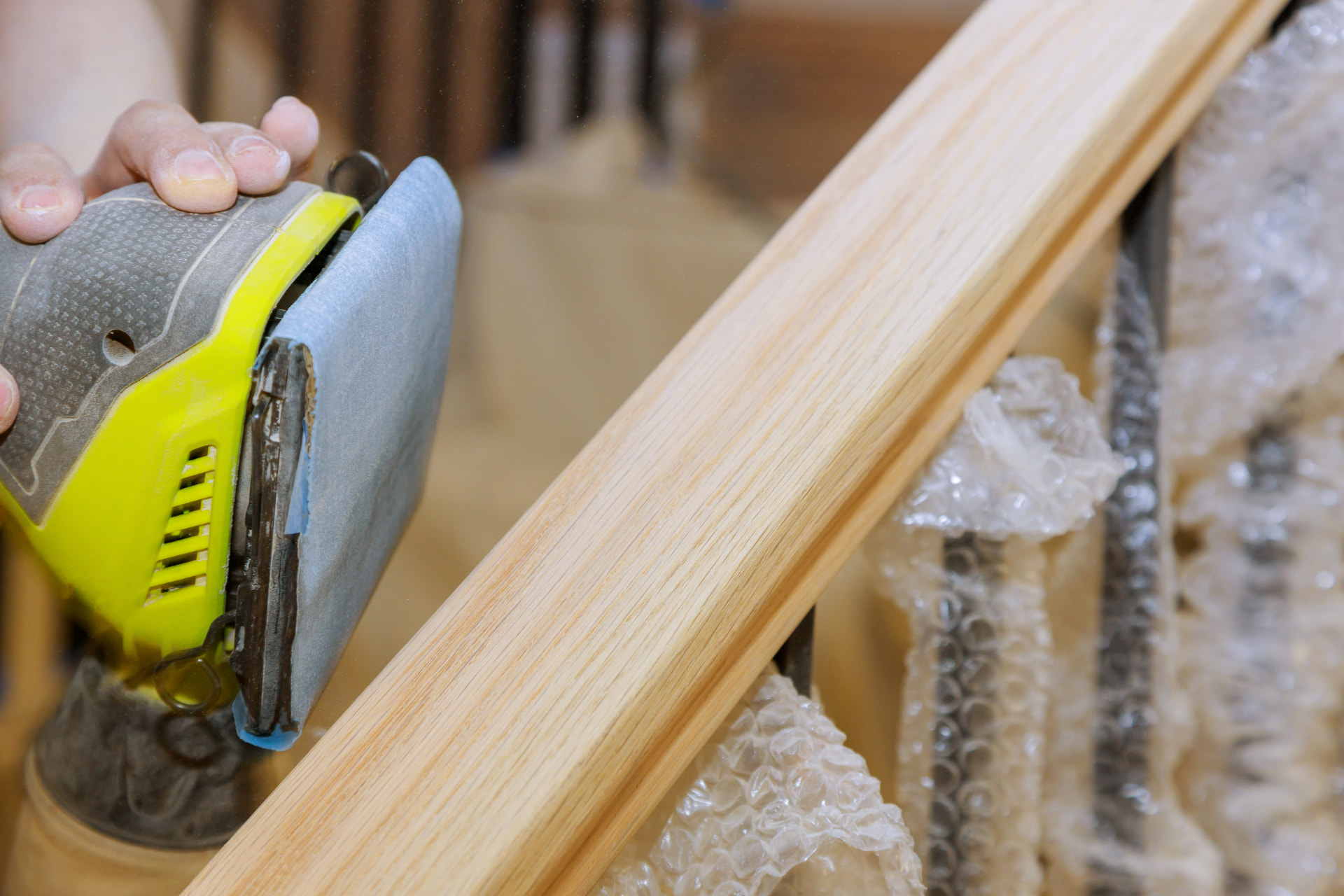
Mixed-tone wooden strip flooring beside a white skirting board
AOC Sanding · Free quotes

A fresh startfor your wooden surface.

Talk directly to Adam. Over 20 years’ experience, clear advice and no quote fee.