Finchley · North London · Hertfordshire
07784 870239adamoc87@hotmail.co.uk
Call AdamFree Quote
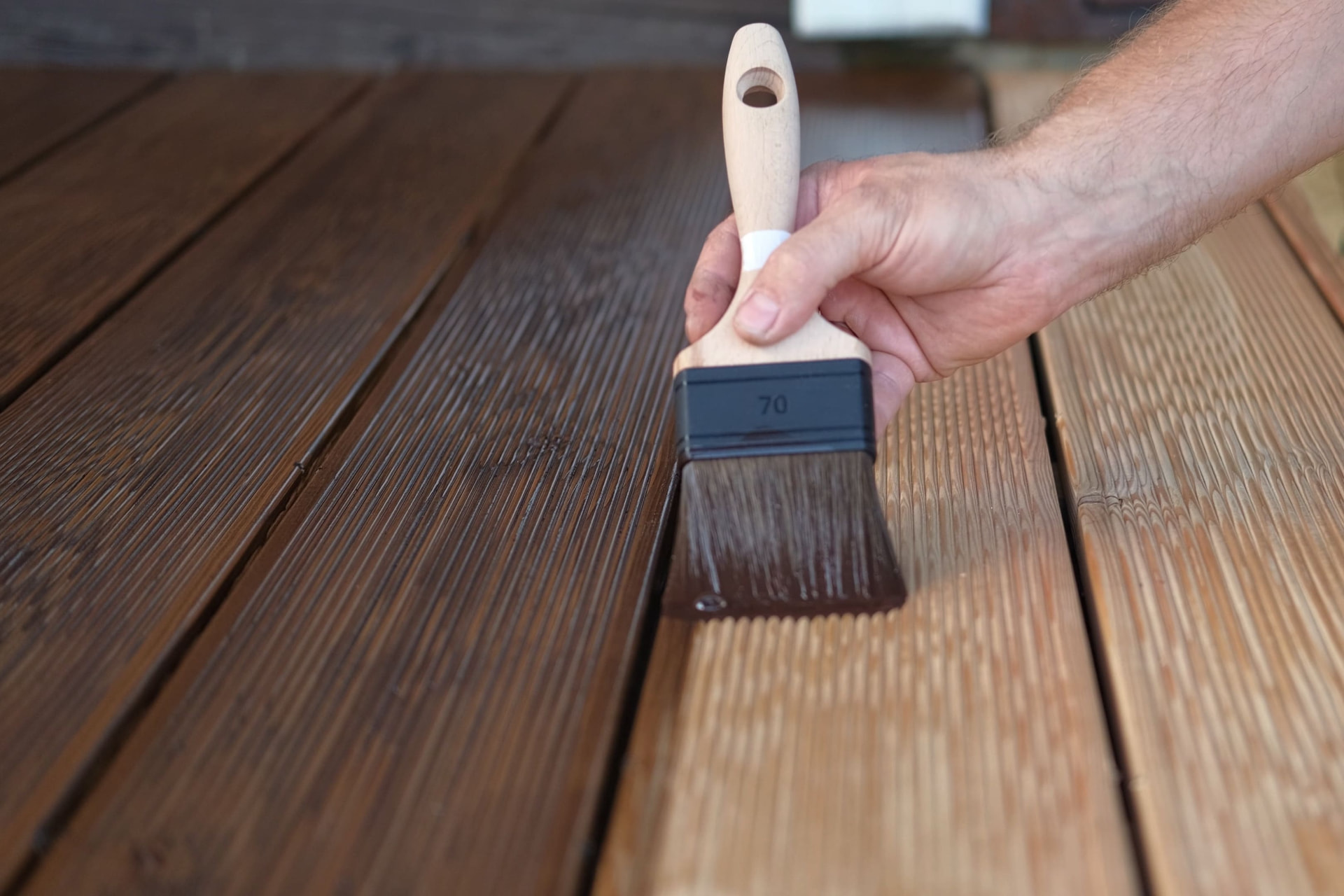
Brush applying a dark finish to wooden boards
AOC Sanding · Finchley & North London

Floor Stainingin Finchley &North London

Explore a suitable change of timber colour, with sample-led expectations and a separate compatible protective finish agreed as part of the specification.

Get a Free Quote
Over 20 years’ individual experience · Free quotes
20+ years’ experienceIndividual trade experience
Lägler-trainedSpecialist floor care
Public liability insuredCover held by AOC Sanding
Free quotesDiscuss your project with Adam
The right work for your wood

Floor Staining:what to consider.

Colour is a separate decision from protection

Floor staining changes the colour of suitable timber. It is not, by itself, a substitute for a protective floor finish. The complete specification needs to address both the desired tone and the coating that will protect the surface during use. A stain can emphasise grain, alter warmth or deepen an existing tone, but it cannot make every species, repaired board and older mark respond identically.

Before choosing a colour, consider the timber beneath the existing coating and the appearance you want in the room. A photograph or colour chart is a useful starting point, not a promise of the result. Natural variation, light direction and the final protective layer all influence what you see. An assessed approach is particularly important when new and old boards share the same floor.

Start with a suitable surface

A stain generally needs a surface prepared in accordance with the chosen system so absorption or bonding is sufficiently consistent. Existing coatings, polish, contamination and uneven preparation can prevent a satisfactory result. Some engineered floors have limited scope for sanding, while non-timber surfaces require different treatment. Whether staining is feasible should be established before settling on a colour that the existing floor cannot reasonably support.

An assessed service from AOC Sanding

AOC Sanding is run by Adam O’Callaghan, who has over 20 years of experience and is Lägler trained. The business holds public liability insurance. These credentials do not remove the need to inspect the individual floor: its construction, condition and existing treatment determine what work is appropriate. Quotes are free, and the proposed scope should make clear which preparation, repairs and finishing stages are included.

Before the problem gets overlooked

Recognise the signs.Avoid the common mistakes.

Uneven tones and misleading expectations

Timber absorbs colour differently across growth patterns, end grain and boards from different sources. Historic stains or local repairs can remain distinguishable after colouring. Darker stain is not a dependable way to hide every defect, and an exact match to a photograph or adjacent room cannot be assumed. Explain which existing features trouble you and which natural variations you are happy to keep.

Previous treatments and patchy absorption

Residual finish, cleaning products or oily contamination can affect how a stain behaves. Uneven preparation may also leave marks that become more obvious once colour is applied. Moisture-related discolouration needs its cause understood rather than simply covered. Where the existing surface history is uncertain, testing and careful assessment help establish limits, but they cannot guarantee that every underlying mark will disappear.

A considered approach

From assessmentto finishing care.

01

Discuss colour in the room’s context

Consider wall colours, daylight, artificial lighting and adjoining flooring before narrowing the palette. A tone that looks balanced in one corner may appear warmer or darker elsewhere. Tell Adam whether your priority is reducing orange tones, achieving a deeper appearance or retaining a natural-looking range. These are design aims, not guaranteed outcomes, and the timber’s starting colour remains an important constraint.

02

Use representative samples where practical

A sample on suitably prepared representative timber is more informative than a generic colour chart. It should be considered alongside the proposed protective finish because that finish can alter tone and sheen. Samples cannot reproduce every board or every lighting condition. Ask how sample approval will be recorded and whether additional sample work forms part of the quotation, rather than assuming unlimited colour trials are included.

03

Agree the full preparation and coating system

The appropriate sequence depends on the timber and selected materials. It may include suitable sanding, careful preparation, colour application and a compatible protective coating, each subject to product requirements. This is general guidance rather than a claim that Adam uses one fixed staining technique. Intercoat compatibility, drying conditions and the acceptable interval before protection all need consideration. The stain and final finish should be specified as a coordinated system.

Practical benefits

A better surface.A clearer decision.

Change the room without pretending to change the species

Where suitable, staining offers a way to alter the visual balance of an existing timber floor without replacing it solely for colour. It can bring the floor closer to a design preference while retaining real grain and character. It does not turn one species into another or erase every historic feature. The most useful brief describes the desired overall impression and accepts reasonable variation between individual pieces.

Make the protective finish a deliberate choice

Separating colour from protection allows a clearer discussion about sheen, cleaning and future maintenance. The selected protective system must be compatible with the stain and appropriate for the floor’s use. Colour alone cannot establish resistance to wear, spills or household cleaning. Ask how the completed system should be maintained and what a future refresh could involve, especially if local repairs are likely to be visible.

Materials, methods & choices

The detailbehind floor staining.

Prepare before colour decisions are finalised

Share images of the whole floor, any replacement boards and areas affected by rugs or furniture. Mention previous oils, waxes or other treatments if known. Clear access for assessment and discuss furniture arrangements before work is agreed. Do not apply household stain or test products directly on the floor without advice, because experimental patches can affect later preparation and may not be removable within the timber’s sanding limits.

Manage transitions and visible differences

Doorways, stairs, thresholds and adjoining rooms can make colour differences more noticeable. Decide whether the proposed work stops at a natural break or continues across connected spaces. Existing fillers and replacement boards may accept colour differently. A local stain patch on an older floor can therefore stand out even when the nominal colour is similar. Wider work may be worth discussing, but it is not automatically necessary or included.

Care for the protective layer, not just the colour

The stain’s appearance is supported by the condition of the finish above or around it, depending on the chosen system. Use the specified cleaner, avoid excess water and protect contact points from abrasion. A scratch that reaches coloured timber may be more conspicuous than light surface wear. Do not attempt a colour touch-up without checking compatibility, because overlapping stain can create a darker patch that is difficult to blend.

Arrange a useful first conversation

For an enquiry, contact Adam on 07784 870239 or email adamoc87@hotmail.co.uk. Contact hours are Monday–Saturday, 8am–8pm. Include photographs taken in daylight, the approximate room size, the property postcode and a description of the problem or desired appearance. Mention stairs, parking restrictions, furniture and any date you are working towards. These details support an informed discussion; they do not replace an assessment or confirm a booking.

Keep sanding claims separate from this service

If floor sanding is included before finishing, AOC Sanding’s up to 98% dust-free Lägler claim applies only to that sanding stage. It is not a dust-reduction claim for stain, lacquer or oil application, and it does not mean the entire project is dust-free. Discuss protection for nearby belongings and access to adjoining rooms as part of the agreed preparation rather than assuming every activity has the same containment requirements.

Your questions answered

Floor StainingFAQs.

For advice about your particular surface, contact Adam with your postcode and the work you have in mind.

Request a free floor staining quote

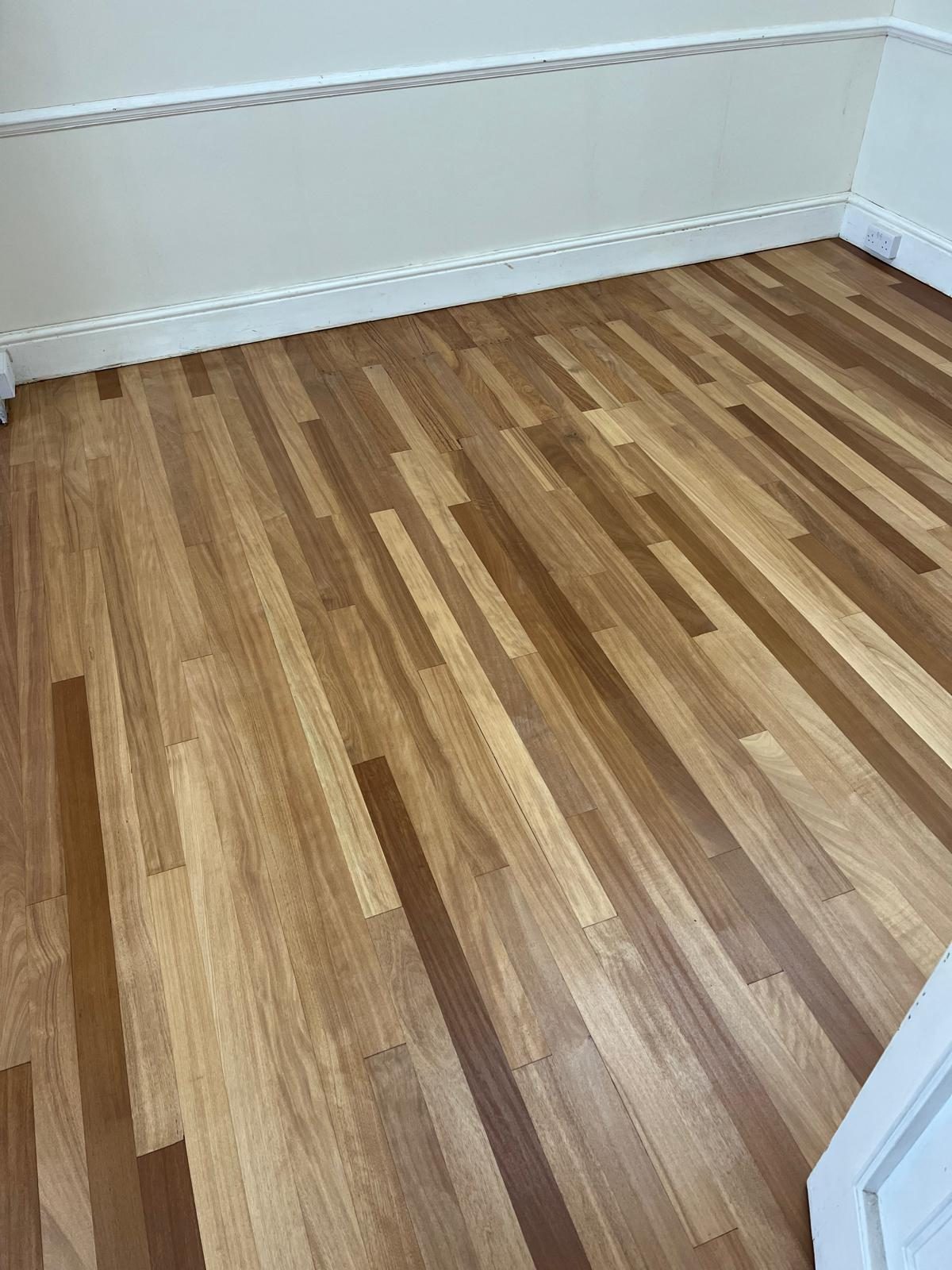
Mixed-tone wooden strip flooring beside a white skirting board
AOC Sanding · Free quotes

A fresh startfor your wooden surface.

Talk directly to Adam. Over 20 years’ experience, clear advice and no quote fee.