Finchley · North London · Hertfordshire
07784 870239adamoc87@hotmail.co.uk
Call AdamFree Quote
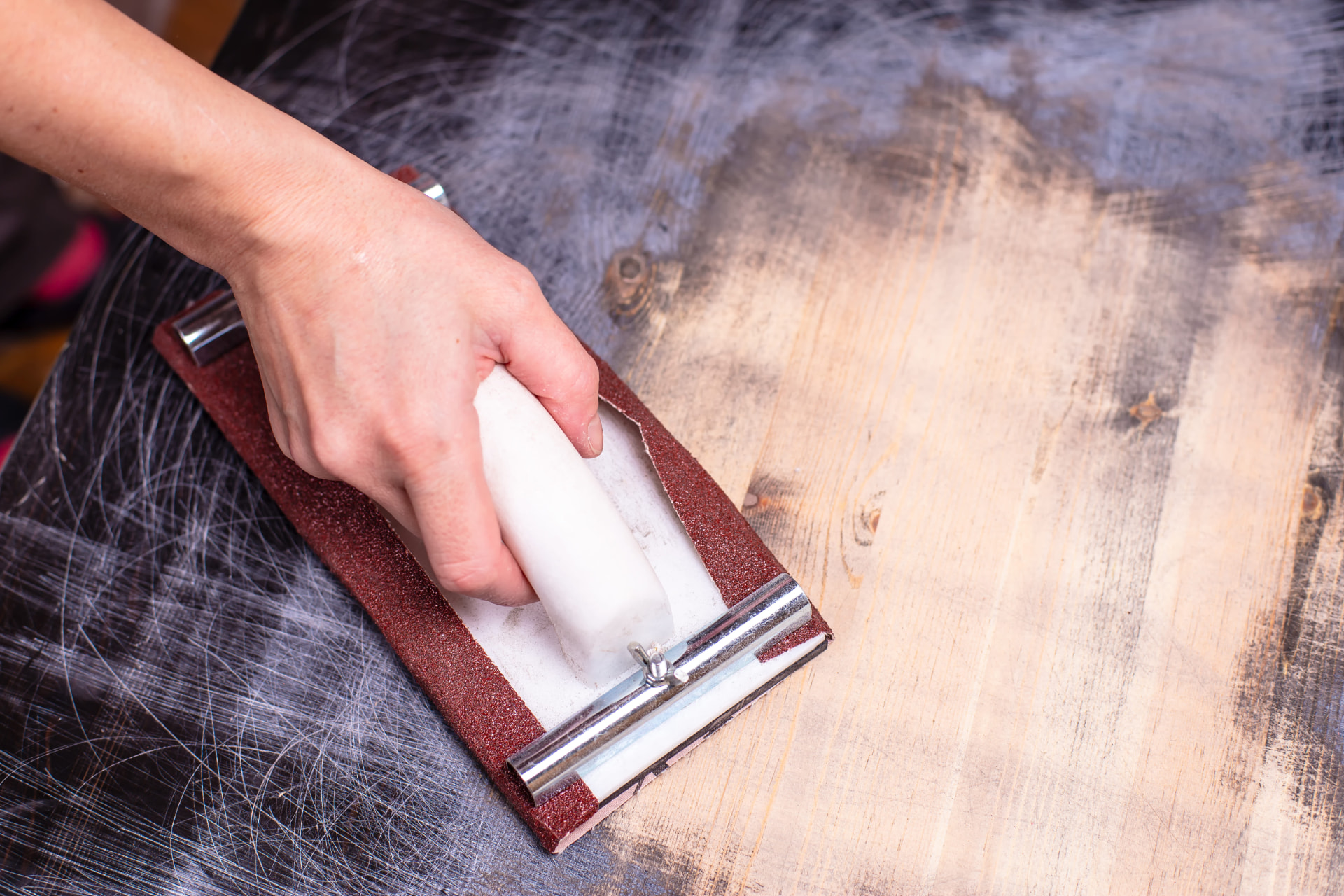
Hand sanding a wooden table surface
AOC Sanding · Finchley & North London

Table Top Sanding & Refinishingin Finchley &North London

A practical assessment of whether a worn timber table top can be renewed, with realistic expectations for marks, colour and the finish needed for its intended use.

Get a Free Quote
Over 20 years’ individual experience · Free quotes
20+ years’ experienceIndividual trade experience
Lägler-trainedSpecialist floor care
Public liability insuredCover held by AOC Sanding
Free quotesDiscuss your project with Adam
The right work for your wood

Table Top Sanding & Refinishing:what to consider.

Renew the working surface without assuming every table is the same

A table top can collect a mixture of scratches, water rings, faded areas and worn finish while the rest of the furniture remains useful. Sanding and refinishing may improve the surface, but the right approach begins with its construction. Solid timber, a thin decorative veneer and a manufactured board with a printed surface offer very different possibilities. An attractive grain pattern alone does not establish that a table can safely be sanded.

AOC Sanding is run by Adam O’Callaghan, who has over 20 years of individual experience and is Lägler-trained. Free quotations are available, and public liability insurance is held. The proposed table work still needs an individual assessment. Floor-sanding equipment credentials should not be interpreted as a dust-reduction promise for furniture, and no floor-sanding dust percentage is claimed for table tops.

Match expectations to how the table is used

A dining table used for family meals needs a different discussion from a decorative occasional table or a shared meeting surface. Explain whether the top regularly meets warm plates, drinks, writing materials or cleaning products. Appearance matters, but so do the maintenance routine and the willingness to accept natural variation. Refinishing should be planned around those everyday demands rather than a photograph of an unrelated piece of furniture.

Before the problem gets overlooked

Recognise the signs.Avoid the common mistakes.

Rings and marks below the finish

Some pale rings sit within a coating, while darker marks can extend into the wood. It is not always possible to identify the full depth from a photograph. Preparation may reduce a mark without removing it completely. Chasing a deep stain through excessive sanding can sacrifice sound material or expose a thin veneer, so the desired improvement needs to be weighed against the construction and remaining surface thickness.

Scratches, dents and worn edges

A scratch removes or cuts material, whereas a dent compresses it; they may not respond in the same way. Rounded edges and shaped profiles can also lose definition if treated too aggressively. An assessment should identify which imperfections are likely to improve and which may remain. An older table can retain signs of use without the entire refinishing project being unsuccessful, provided those limitations are understood beforehand.

Previous finishes and mismatched extensions

Old coating, local repairs and separate extension leaves can complicate colour matching. A leaf stored away from daylight may differ from the main top even when both are prepared together. Existing staining can also affect the final appearance. Discuss all leaves and removable sections at the outset, including those not normally fitted, so that the quotation and appearance expectations cover the complete surface you want considered.

A considered approach

From assessmentto finishing care.

01

Identify the construction and agreed boundaries

Share photographs of the top, edges, underside and any maker’s information you already have. Include dimensions and details of extension mechanisms or fragile joints. Clarify whether the request concerns the top only or other parts of the table as well. Legs, aprons, bases and chairs should not be assumed included in a table-top quotation, and moving or dismantling arrangements need separate agreement.

02

Prepare with the material limitations in mind

The preparation method should be determined by construction, condition and the existing finish. A veneer demands different caution from a substantial solid board, and areas near inlays or edge banding may need special consideration. Surface preparation is not a structural repair to a loose frame. Any instability, failed joint or damaged mechanism should be identified so that cosmetic work is not mistaken for a complete furniture repair.

03

Agree colour, sheen and curing requirements

Timber species, grain and earlier treatments influence how a finish looks. A sample can help communicate a direction, but it is not a guarantee of an exact match to surrounding furniture. Ask how the selected system suits the intended use and what restrictions apply while it cures. Returning the table to a room and placing hot dishes or heavy objects on it may require different stages of readiness.

Practical benefits

A better surface.A clearer decision.

Preserve a useful piece of furniture

If the top is suitable, refinishing can keep an existing table in use rather than replacing it because of surface deterioration alone. This may be particularly helpful where its size, proportions or sentimental significance are difficult to replace. Suitability remains the deciding factor: a worn decorative layer or extensive damage may limit intervention. A useful quotation explains the likely improvement without promising a new-table appearance from every older piece.

Make the finish a deliberate choice

Refinishing creates an opportunity to reconsider sheen and the relationship between the table and its room. A quieter sheen may reveal grain differently from a reflective surface, while colour changes can emphasise variation rather than hide it. Discuss practical care as part of that choice. A finish should not be described as scratch-proof, heat-proof or maintenance-free simply because it is intended for regular use.

Materials, methods & choices

The detailbehind table top sanding & refinishing.

Build a quotation around the actual table

Table top sanding and refinishing is priced individually, not from the commercial floor-sanding guide. Size is relevant, but so are construction, edge details, previous coatings, access and the presence of separate leaves. Ask whether both sides, only the visible upper face or specific edges are included. Any work to a base or additional furniture should be listed explicitly rather than inferred from the service name.

Quotations are free. Clear photographs can support an initial discussion, but they may not reveal veneer thickness or hidden damage. Avoid dismantling a fragile table simply to obtain pictures unless you know how it is assembled. Cash and bank transfer are accepted; confirm the payment arrangements, agreed scope and any handling responsibilities before accepting the quotation.

Arrange handling and a suitable work setting

Access can be as important as the dimensions of the top. Mention narrow stairs, shared entrances, limited parking and whether a table can pass through doorways without dismantling. Do not assume collection, transport, storage or off-site work is included. The location of the proposed work and responsibility for moving the furniture should be confirmed as part of the arrangements.

Protecting nearby furnishings and keeping people away from an unfinished surface should also be discussed. Preparation and finishing requirements vary, so there is no standard promise about completion time. AOC Sanding’s business hours are Monday–Saturday, 8am–8pm; these do not establish emergency availability or a guaranteed appointment. Explain any event date before booking and allow for the selected finish’s return-to-use requirements.

Protect the finish without overcomplicating care

Use appropriate mats or coasters and avoid dragging rough objects across the surface. Hot cookware should have suitable protection beneath it rather than relying on the coating alone. Clean spills promptly with a method compatible with the finish and avoid prolonged moisture. A plastic covering or decorative object left in place during curing may affect some finishes, so check the care guidance before covering or dressing the table.

Performance depends on use, product choice and maintenance, and no fixed lifespan is promised. Natural movement can also occur as indoor humidity changes; refinishing does not make timber inert. If an issue appears, contact AOC Sanding with photographs and details of use. Re-visits are available if needed, not as an unconditional guarantee that every subsequent mark or change will be remedied.

Your questions answered

Table Top Sanding & RefinishingFAQs.

For advice about your particular surface, contact Adam with your postcode and the work you have in mind.

Request a free table top sanding & refinishing quote

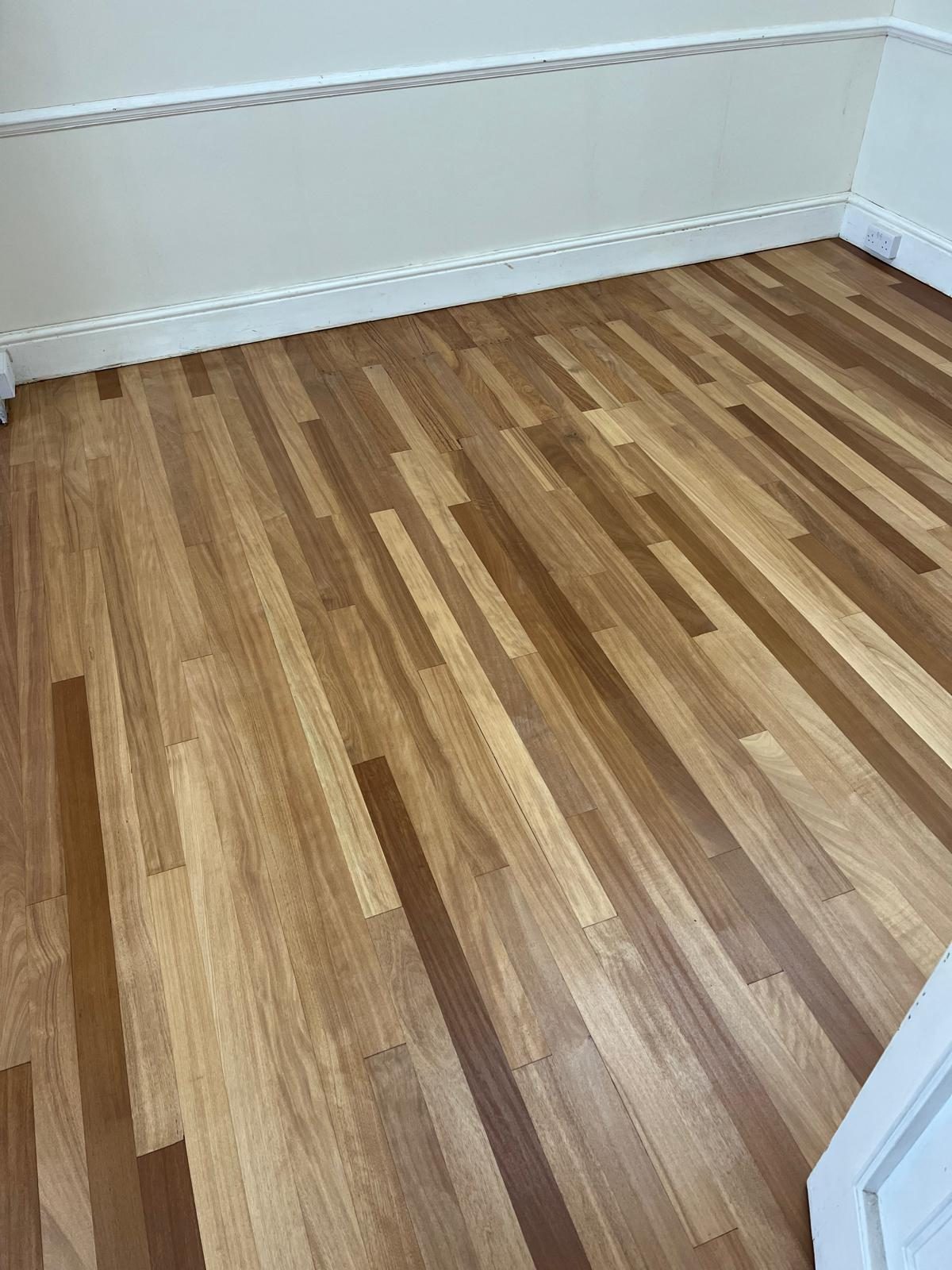
Mixed-tone wooden strip flooring beside a white skirting board
AOC Sanding · Free quotes

A fresh startfor your wooden surface.

Talk directly to Adam. Over 20 years’ experience, clear advice and no quote fee.