Finchley · North London · Hertfordshire
07784 870239adamoc87@hotmail.co.uk
Call AdamFree Quote
Floor sanding machine on wooden flooring
AOC Sanding · Finchley & North London

Commercial Floor Sandingin Finchley &North London

A considered route to renewing a worn commercial timber floor, with preparation, finish selection and access arrangements assessed around how your premises are used.

Get a Free Quote
Over 20 years’ individual experience · Free quotes
20+ years’ experienceIndividual trade experience
Lägler-trainedSpecialist floor care
Public liability insuredCover held by AOC Sanding
Free quotesDiscuss your project with Adam
The right work for your wood

Commercial Floor Sanding:what to consider.

Assess the floor before planning the work

Commercial timber floors can become uneven in appearance long before they need replacing. Traffic routes, chair movement and changes in furniture layout may expose differences in wear. Sanding can remove a deteriorated surface and create a more consistent base for refinishing, but only where the construction and remaining timber thickness allow it. An assessment should distinguish superficial wear from movement, moisture problems or structural damage that sanding alone cannot resolve.

AOC Sanding is run by Adam O’Callaghan, who has over 20 years of individual experience and is Lägler-trained. The business holds public liability insurance, and quotations are free. These facts help establish who you are dealing with; the proposed scope, exclusions and practical arrangements still need to be agreed for your particular premises.

Plan for the way the premises operate

A reception area, shared office and customer-facing room place different demands on a finish. Footwear, tracked-in grit, cleaning routines and moving furniture all influence the specification. Explain the normal use of each area rather than choosing a finish on appearance alone. A suitable system should be considered alongside the available closure period and any requirements affecting safe circulation through the building.

Approximate floor-sanding guide: £40–£45 per m². Your floor, preparation and finishing choices determine the assessed quote; this is not fixed pricing.

Before the problem gets overlooked

Recognise the signs.Avoid the common mistakes.

Worn routes and inconsistent colour

A pale route through an otherwise darker room may reflect finish wear, ingrained dirt or different exposure to daylight. Removing the old surface can improve consistency, although natural variation and some deep staining may remain. Existing rugs or counters can leave outlines that are not completely erased. Discuss acceptable variation before authorising work, particularly if the floor will be photographed, used for displays or viewed under strong directional lighting.

Loose boards and other underlying faults

Squeaks, lifting edges and damaged board ends deserve attention before refinishing. A new coating does not secure a moving floor or correct an unresolved source of damp. Where repairs are needed, their extent should be identified separately from surface preparation. If the premises contain unknown older floor coverings or adhesives, their condition and suitability for disturbance also need consideration before any removal is planned.

A considered approach

From assessmentto finishing care.

01

Define the area, access and responsibilities

Start with the approximate area, photographs and a description of the business activity. Identify fixed counters, heavy equipment, partitions, thresholds and any rooms that must remain accessible. The quotation should clarify what is included, what needs moving and whether any repairs require a separate allowance. Responsibility for moving stock, disconnecting equipment and controlling access should be agreed before a start date is confirmed.

02

Prepare a sound base for finishing

The appropriate sanding sequence depends on the floor type, previous coatings and condition. Edges and transitions need to be considered alongside the main open area so that the result is coherent. Lägler floor sanding can be up to 98% dust-free, but this is not a promise of zero dust. Sensitive stock, electronics and adjoining spaces still require sensible protection and an agreed cleaning plan.

03

Agree finishing and return-to-use requirements

A finish should be selected for the timber, intended use and maintenance expectations rather than described as universally best. Samples can help explain colour and sheen, although the completed floor may vary with grain and lighting. Drying, careful foot traffic, furniture replacement and full curing can represent different stages. The relevant product guidance and site conditions should determine when each activity can safely resume.

Practical benefits

A better surface.A clearer decision.

Retain useful timber where appropriate

Refinishing can preserve a serviceable floor rather than replacing sound material simply because its surface looks tired. It can also make wear patterns easier to understand by removing accumulated coatings and exposing the timber more clearly. This is a conditional benefit, not a recommendation to sand every floor. A thin engineered wear layer, excessive previous sanding or unresolved damage may make another approach more appropriate.

Make routine care more consistent

A suitably selected finish and clear care instructions can support a more predictable cleaning routine. Staff should know which cleaning products are compatible, how much moisture to use and when to report damage. Entrance matting and furniture protection can reduce avoidable abrasion. These measures do not make the floor maintenance-free, but they help connect the investment in refinishing with everyday decisions made by the people using the building.

Materials, methods & choices

The detailbehind commercial floor sanding.

Commercial pricing and the written scope

For commercial floor sanding only, £40–£45 per m² is a guide rather than a fixed quotation. Floor condition, access, repairs, finish requirements and the precise scope can affect the price. A small complicated layout may require different consideration from an open room of the same measured area. Ask for a free quotation that identifies what is included, any exclusions and how changes discovered during preparation would be discussed.

The guide should not be transferred to worktops, tables, staircases or board replacement. Those services involve different materials, detailing and preparation. Payment can be made by cash or bank transfer. Confirm the payment arrangements when accepting the quotation so that the person authorising work and the person arranging payment have the same understanding.

Manage disruption without assuming a fixed programme

Commercial work needs a realistic access plan, not a generic promise about how quickly every floor can be completed. Area, repairs, the coating system, ventilation and environmental conditions all affect the programme. Ask whether phased work is feasible, but do not assume separate sections can always remain in use. Shared access routes, dust protection and finish curing may make a single closure more practical.

Opening hours are Monday–Saturday, 8am–8pm. These are business hours, not a promise of immediate attendance, overnight work or a guaranteed out-of-hours programme. If you have a reopening date, describe it at the first enquiry. Adam can then discuss availability and whether the proposed scope and finish requirements can realistically fit your constraints.

Confirm expectations and aftercare

A commercial floor should be judged against an agreed scope and the limitations of the existing material. Historic repairs, natural colour differences and deeper marks may remain visible even after careful preparation. Explain any priorities, such as reducing a particular dark patch or changing sheen, before work begins. This gives the assessment a useful focus without turning a desired appearance into an unsupported guarantee.

Re-visits can be arranged if needed; this is not an unconditional guarantee or a promise that every later mark will be covered. Report concerns with photographs and an explanation of when they appeared. Keep the agreed care guidance available to cleaners and facilities staff, because incompatible products, excessive water or premature heavy use can affect the finished surface.


Your questions answered

Commercial Floor SandingFAQs.

For advice about your particular surface, contact Adam with your postcode and the work you have in mind.

Request a free commercial floor sanding quote

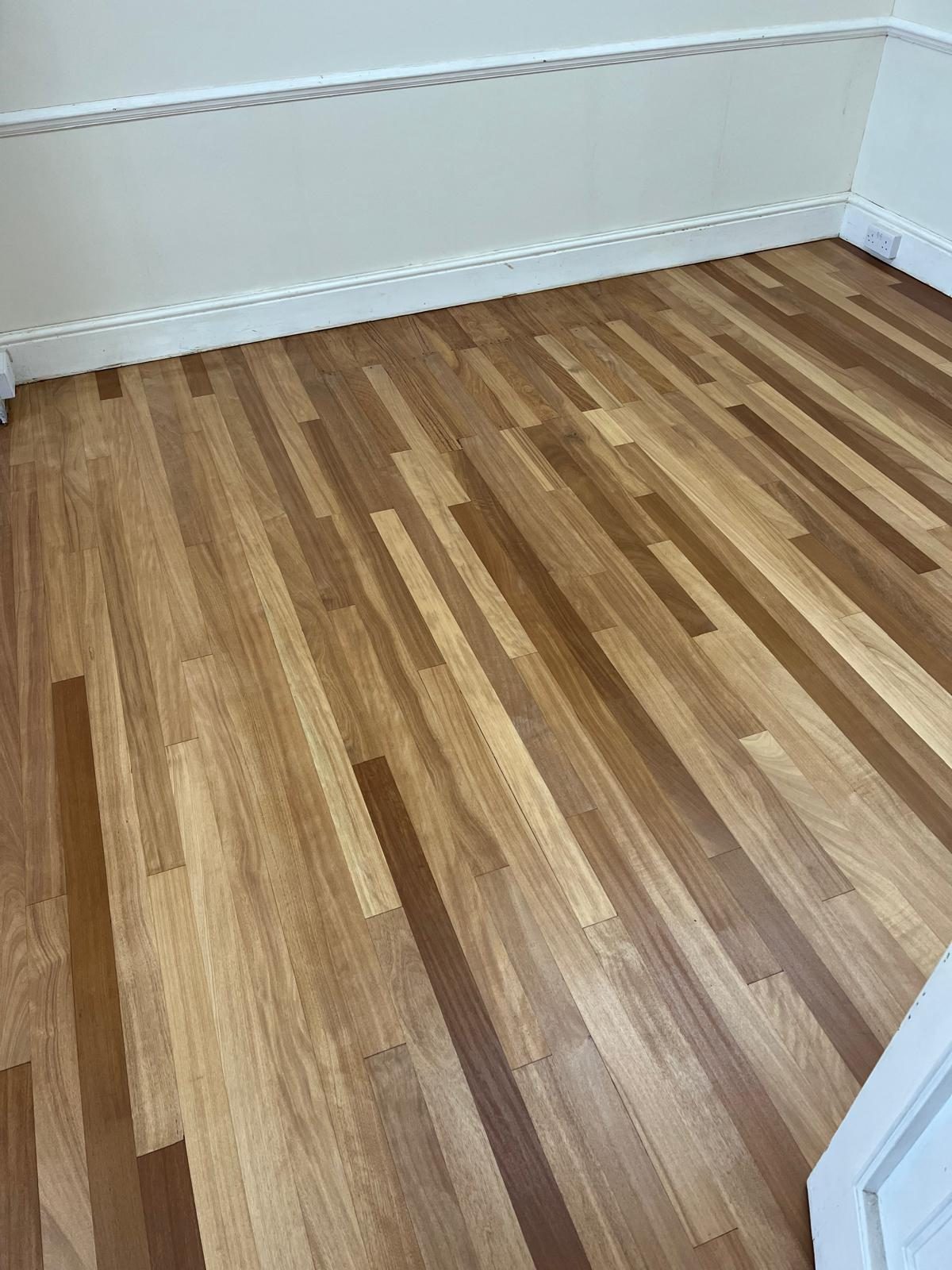
Mixed-tone wooden strip flooring beside a white skirting board
AOC Sanding · Free quotes

A fresh startfor your wooden surface.

Talk directly to Adam. Over 20 years’ experience, clear advice and no quote fee.