01Map the sanding area and its surroundings
Identify the exact floor area, adjoining spaces and the routes needed for entry, waste removal and normal household movement. Mention built-in storage, open shelving, electronic equipment and anything that cannot easily be moved. Photographs of doorways and adjoining rooms can support the discussion, although they do not replace checks on the floor itself. The initial assessment should also establish the construction and remaining sandable material. A floor that is unsuitable for sanding does not become suitable simply because a dust-reducing system is available.
02Agree clearance, protection and responsibilities
Before the work starts, confirm what must leave the room and who is responsible for moving and protecting it. Remove loose textiles and small items from the agreed area where practical. Discuss curtains, fitted units and storage rather than assuming they can be ignored. Protection arrangements need to remain compatible with safe access and the property’s ventilation requirements. Ask what preparation is included and what you should organise beforehand. This helps avoid a last-minute situation in which the floor is ready to sand but the surrounding room is not.
03Combine suitable sanding with realistic dust control
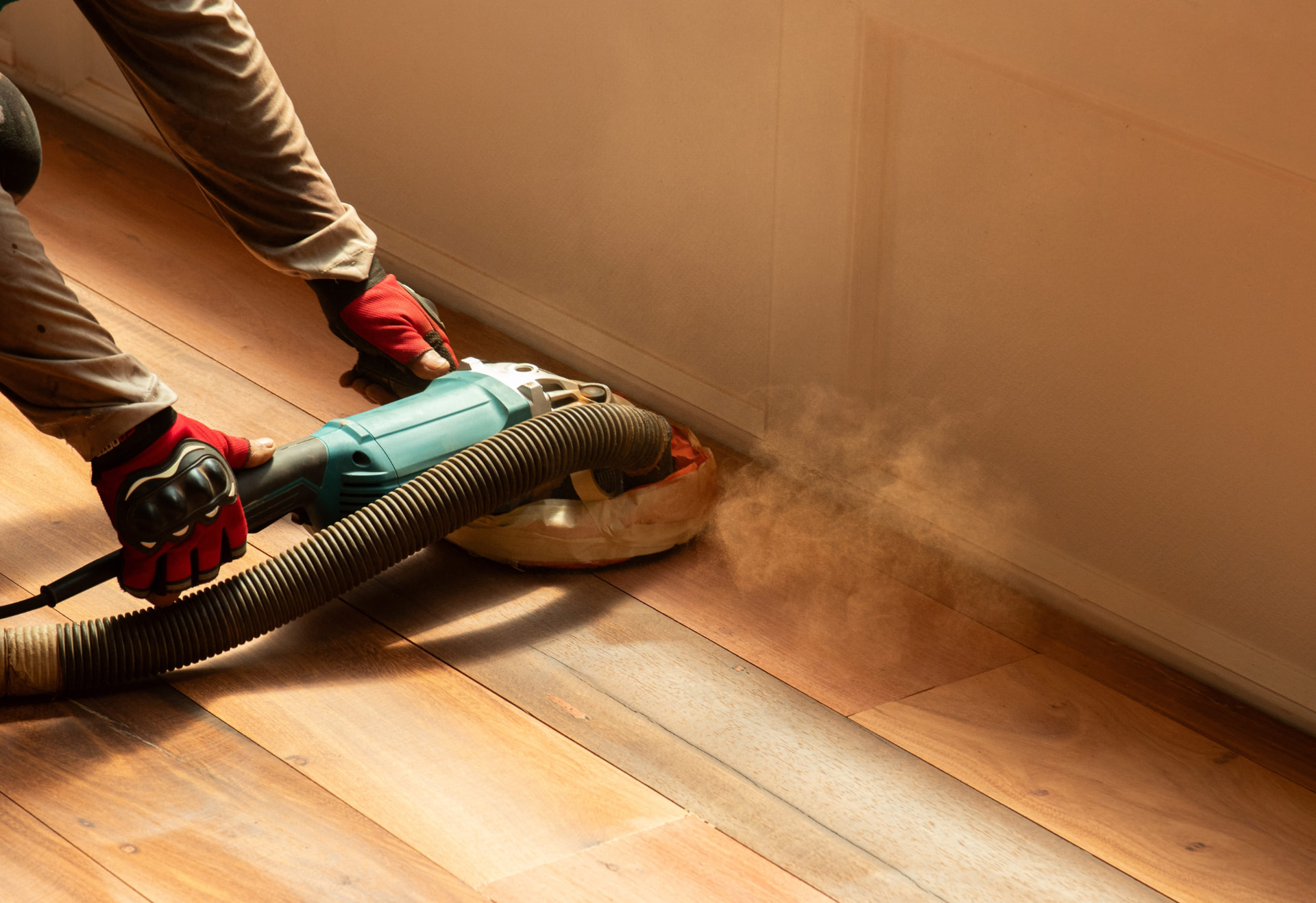
The sanding specification still needs to suit the wood, its condition and any existing finish. Dust reduction does not justify removing more material than the floor can safely spare, nor does it resolve loose boards, damp or deep staining. AOC Sanding’s confirmed Lägler sanding claim is up to 98% dust-free, not zero dust. Any additional equipment, containment methods or cleaning arrangements should be discussed for the actual project; they should not be assumed to be included merely because another contractor uses them or a generic guide recommends them.
04Review the room before bringing belongings back
At the end of the agreed work, establish what cleaning or checking is included and what remains your responsibility. Furniture should not be returned solely because sanding has stopped: the selected finish may impose separate restrictions. Follow the relevant product guidance for access, furniture, rugs and cleaning. If fine residue is noticed outside the working area, raise it before using a cleaning method that could affect the new finish. Any cleaning close to fresh coating should be compatible with that coating rather than improvised with strong chemicals or excessive water.