Finchley · North London · Hertfordshire
07784 870239adamoc87@hotmail.co.uk
Call AdamFree Quote
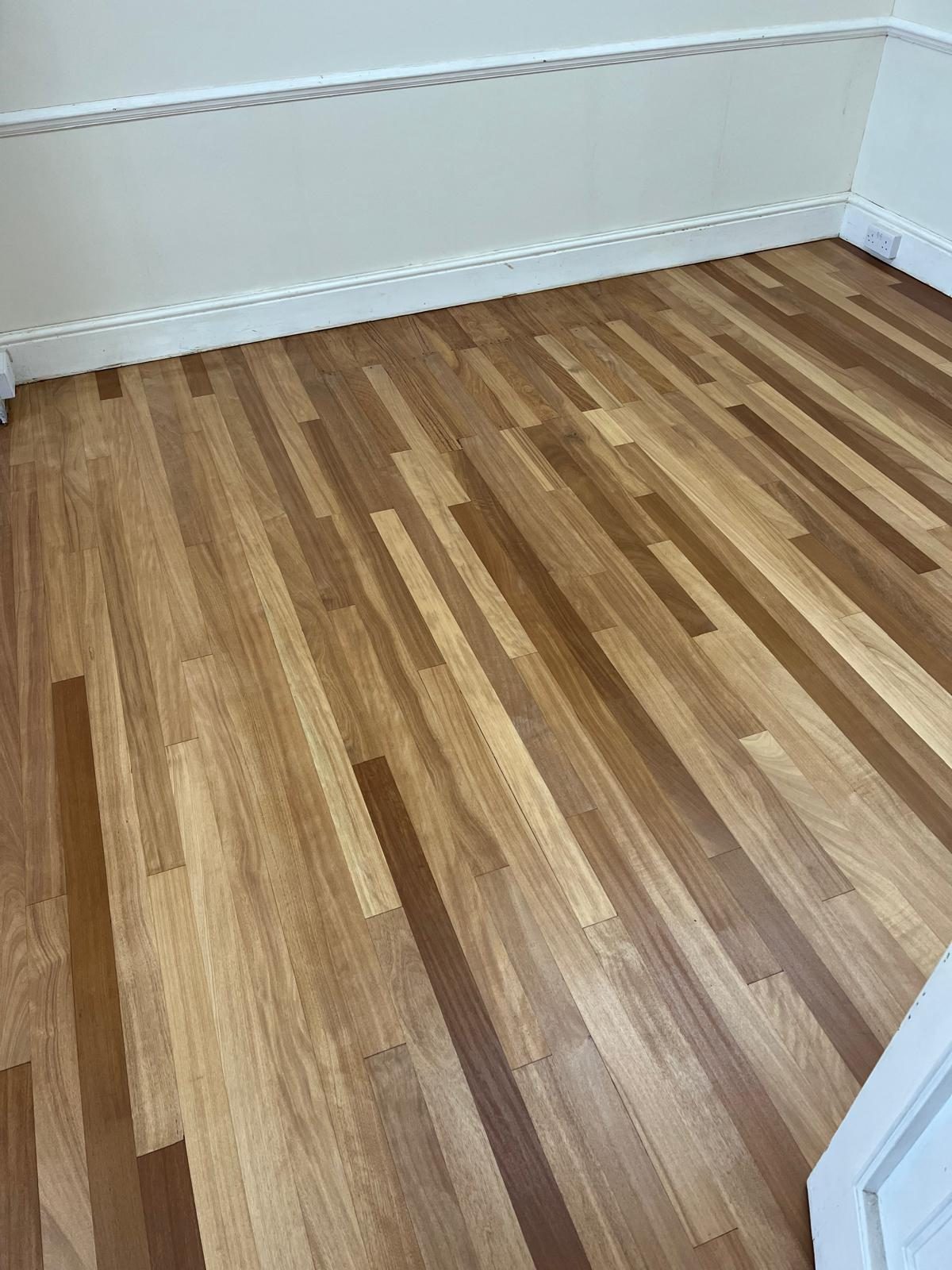
Pale herringbone parquet flooring in a green-walled room
AOC Sanding · Finchley & North London

Wood Floor Refinishingin Finchley &North London

A renewed protective surface and an informed choice of appearance, with the preparation matched to the existing coating, the timber and the maintenance you are prepared to undertake.

Get a Free Quote
Over 20 years’ individual experience · Free quotes
20+ years’ experienceIndividual trade experience
Lägler-trainedSpecialist floor care
Public liability insuredCover held by AOC Sanding
Free quotesDiscuss your project with Adam
The right work for your wood

Wood Floor Refinishing:what to consider.

Refinishing is a decision about the surface system

Wood floor refinishing focuses on the coating that protects the wood and shapes its appearance. The right approach depends on what is already on the floor, how firmly it is attached and whether the wood beneath is sound. Some circumstances may allow a suitable maintenance treatment; others may call for removal of the existing finish and more extensive preparation. Neither route should be promised without assessment. The useful question is not simply which sheen you like, but which compatible treatment addresses the actual condition.

Connect the desired look with practical care

A very matt appearance, a stronger colour emphasis or a more reflective surface can each change how a room feels, but appearance alone is not a complete specification. Cleaning habits, traffic and tolerance for visible wear also matter. AOC Sanding is run by Adam O’Callaghan, who has over 20 years of individual experience and is Lägler-trained. A refinishing discussion should turn your preferred look into an assessed proposal, with clear limits where the existing timber or coating makes a particular result uncertain.

Approximate floor-sanding guide: £40–£45 per m². Your floor, preparation and finishing choices determine the assessed quote; this is not fixed pricing.

Before the problem gets overlooked

Recognise the signs.Avoid the common mistakes.

A tired coating is not always a damaged floor

Dullness, patchy sheen and light surface marking can make sound wood appear more worn than it is. Before assuming that deep sanding is necessary, establish whether the issue lies mainly within the finish. Conversely, an attractive coating cannot compensate for loose boards, moisture or deep damage. Separating these conditions helps define a proportionate treatment. Any lighter maintenance route depends on compatibility and adequate adhesion; it should not be offered as an automatic shortcut simply because the visible marks look shallow in a photograph.

Unknown cleaners and coatings complicate adhesion

A floor’s treatment history matters when considering another coating. Residues from unsuitable cleaners, polishes or previous products may affect how a new finish behaves. Tell Adam what has been used, even if the exact product is uncertain. A label or photograph may be more useful than describing everything as varnish or oil. Compatibility needs assessment, and a new layer should not be assumed to adhere successfully over an unidentified surface. Where testing is appropriate, its limits and implications should be discussed before committing to the wider area.

Colour differences cannot always be coated away

Areas exposed to light, sections previously covered by rugs and replacement boards can differ before a new finish is applied. A clear coating may emphasise rather than erase those differences. A colour-changing treatment, where suitable, also interacts with the wood’s grain and absorbency, so it should not be presented as a guaranteed way to make every board identical. If uniformity is your main objective, discuss that early. Samples can guide expectations but cannot ensure identical colour across timber with varied history or construction.

A considered approach

From assessmentto finishing care.

01

Identify the existing finish and the cause of wear

Describe where the surface looks dull, where it has worn through and whether cleaning has changed its appearance. Include any sticky areas, flaking or recurring patches rather than concentrating only on the overall sheen. Share known product history and cleaning habits. The assessment should establish whether a maintenance treatment is suitable or whether more extensive removal is needed. It should also identify underlying defects that refinishing alone cannot solve. This avoids specifying a new coating before the condition of the old system has been understood.

02

Choose an appearance and maintenance balance

Discuss sheen, colour emphasis and the way the room will be used. Depending on substrate and product suitability, different finish systems can offer different visual effects and care requirements. No single type should be described as best for every household. Consider entrances, dining areas, pets and furniture movement alongside the desired look. Where a sample is appropriate, assess it under the room’s usual lighting and remember that surrounding colours affect perception. Confirm the intended specification rather than relying on an informal description such as natural or hard-wearing.

03

Prepare the surface for the agreed system

Preparation needs to follow the requirements of the selected compatible treatment and the condition of the floor. It may involve sanding where suitable, but the amount removed should reflect the available wood rather than a desire to erase every feature. AOC Sanding uses Lägler floor sanding described as up to 98% dust-free, not zero dust. Agree room clearance and protection even when dust reduction is part of the work. Any repair, contamination issue or preparation outside the initial scope should be resolved before application rather than hidden beneath the finish.

04

Apply, protect and return the room to use carefully

Application and subsequent restrictions should follow the chosen product’s requirements and the assessed setting. A surface that appears dry may not yet be ready for every type of use. Ask separately about walking, furniture, rugs and cleaning; each may need its own instruction. There is no universal drying duration for wood floor refinishing. Avoid arranging other dusty work around the newly treated area without discussing sequencing. Once normal use is appropriate, follow the relevant care guidance rather than assuming a new coating can tolerate any household cleaning method.

Practical benefits

A better surface.A clearer decision.

A deliberate change in the room’s appearance

Where the floor is suitable, refinishing can change how the wood reflects light and how strongly its grain and colour are expressed. This can be useful when the existing coating looks too glossy, uneven or visually heavy for the room. The result remains connected to the underlying timber, so it should not be sold as complete control over every board’s colour. A clear appearance brief helps make the selection meaningful and gives you a better basis for considering samples, limitations and the final proposed finish.

Protection matched to the way the floor is used

The point of refinishing is not only visual improvement. A suitable coating provides a surface intended for the floor’s assessed use and a defined approach to care. It does not make timber immune to grit, standing moisture or dragging furniture. Instead, it gives you a system whose maintenance requirements can be understood and followed. This matters when choosing between appearances that may look similar in a photograph but require different upkeep. The practical benefit depends on a compatible specification and appropriate use after application, not on a vague durability label.

A proportionate response to wear

Assessing the coating separately from the wood can help avoid unnecessary material removal where a compatible maintenance option is genuinely suitable. Equally, it prevents reliance on a superficial refresh when the existing finish is failing or the timber needs attention. The benefit is a reasoned choice between possible scopes, not a promise that the least disruptive option will always work. Ask why a proposed route suits the floor and what limitations remain. This makes the work easier to compare than quotations that describe every treatment simply as refinishing.

Materials, methods & choices

The detailbehind wood floor refinishing.

Sheen, grain and colour should be considered separately

Sheen describes how a surface reflects light, while colour and grain emphasis relate to how the finish changes the visible wood. Choosing a lower sheen does not automatically make the timber lighter, and a clear finish does not necessarily leave raw wood looking unchanged. The effect depends on the wood and the selected product. Evaluate any appropriate sample in more than one lighting condition. If adjacent rooms will remain untreated, include those transitions in the discussion so a local improvement does not create an unexpected visual contrast at the doorway.

Local touch-ups may remain visible

A small worn patch can look like a straightforward repair, but the surrounding finish may have aged or changed colour. A local treatment can therefore differ in sheen, tone or texture even when the material is compatible. Whether it is a sensible option depends on the finish system, damage and your expectations. Do not assume that treating only the visible mark will produce an invisible join. Discuss the trade-off between retaining more existing finish and treating a broader area, especially in uninterrupted rooms where changes catch the light.

Read the quotation and the aftercare together

The approximate floor sanding guide is £40–£45 per m², not a fixed refinishing quotation. Preparation, condition, access and the chosen finish require assessment, and free quotes are available. Clarify what the proposed coating system includes without assuming a particular number of applications from a generic service description. Ask for suitable aftercare advice as part of understanding the treatment. Payment can be by cash or bank transfer. A clear scope and a realistic maintenance plan are more useful than comparing a headline price without knowing the preparation or care requirements.

Your questions answered

Wood Floor RefinishingFAQs.

For advice about your particular surface, contact Adam with your postcode and the work you have in mind.

Request a free wood floor refinishing quote

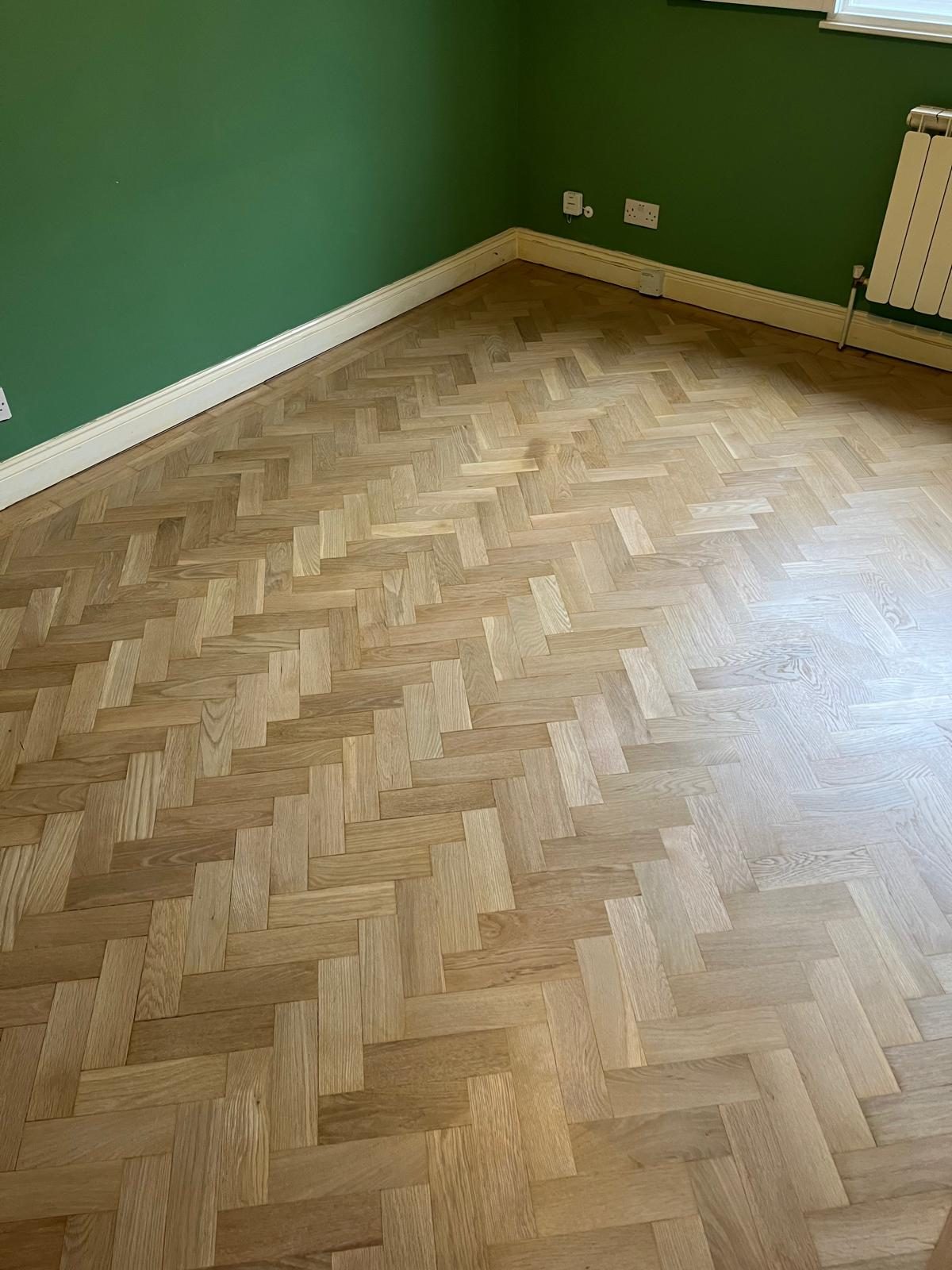
Mixed-tone wooden strip flooring beside a white skirting board
AOC Sanding · Free quotes

A fresh startfor your wooden surface.

Talk directly to Adam. Over 20 years’ experience, clear advice and no quote fee.